
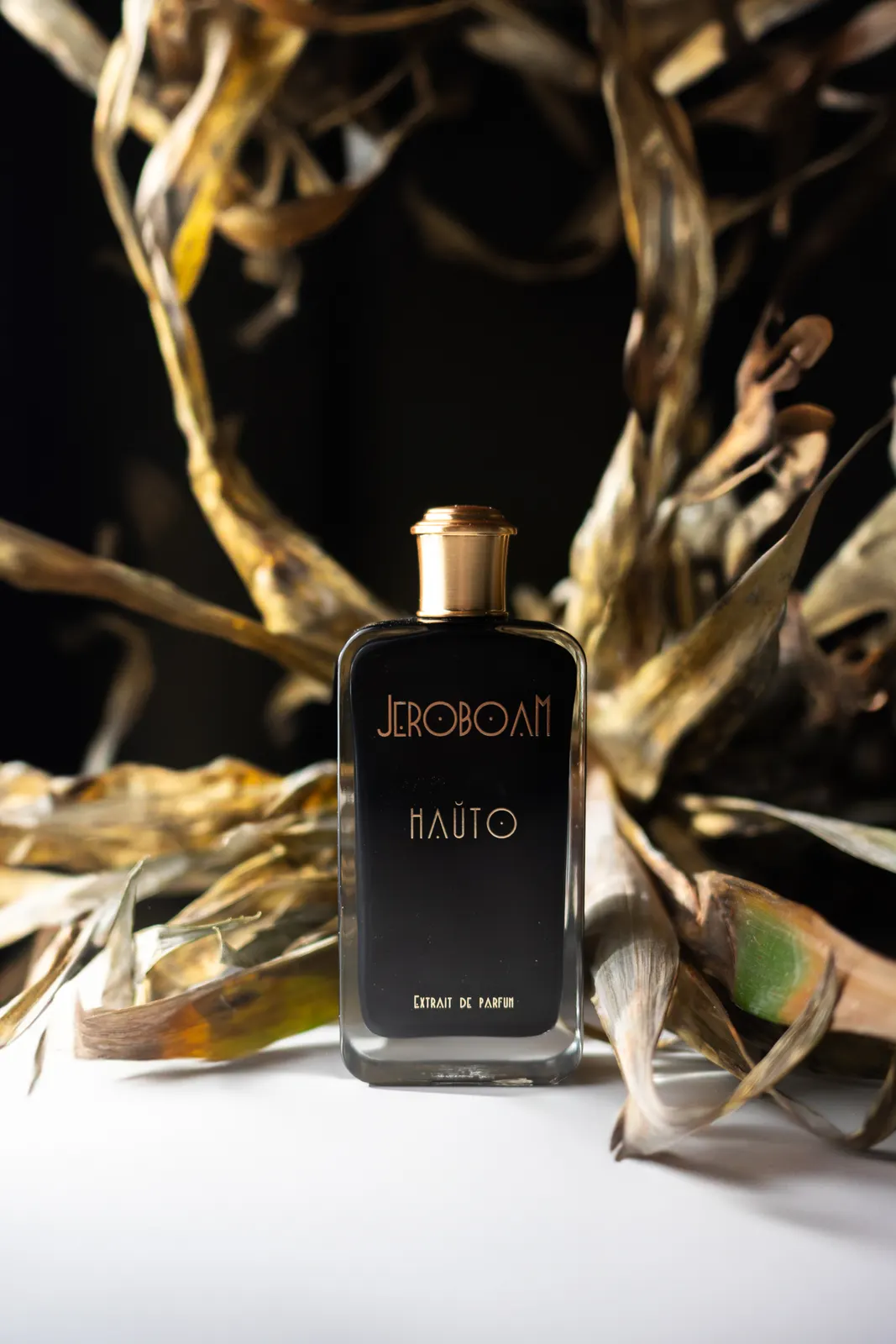
Packshot or lifestyle product photo: for most brands, that is not really the choice. The packshot sells, and its rules are set by the platforms where your product pages live. The lifestyle photo creates desire, on your website, your social channels and your campaigns. The real decision is the balance between the two, channel by channel.
In brief
The packshot (the product alone on a neutral background) is the main image product pages expect, from Amazon to Google Shopping. The lifestyle photo shows use, scale and the brand's world, and Google accepts up to 5 lifestyle images per product. The two complement each other and are ideally produced on the same day.
Packshot or lifestyle photo: most brands need both
A packshot and a lifestyle photo do not answer the same question for the buyer. The packshot answers "what exactly does this product look like?". The lifestyle photo answers "is this product for me?". A brand with only one of the two leaves the other question open.
The packshot isolates the product on a neutral background, usually white. The light is even, colours and materials are rendered faithfully, and the framing is identical from one product to the next. Its role is to inform and reassure: buyers compare, zoom in, check a shade or a finish.
The lifestyle photo places the product in a setting, in use or within a composition. A hand holding the bottle, a bottle of champagne on a laid table, a ceramic piece in the light of a window. Its role is to give scale, to tell the story of the brand's world and to trigger desire.
Google itself separates the two explicitly in Merchant Center: a main image on one side, "lifestyle" images on the other, each with its own rules. A catalogue made only of packshots reads like a spreadsheet; a brand that only shows staged scenes leaves doubt about the details, and falls short of marketplace requirements.
What Google and Amazon require for the main image
The main image of a product page follows precise rules, published by the platforms themselves. Those rules form the minimum specification for any packshot intended for online sales.
Amazon, in its official product photo guide, describes a pure white background (RGB 255, 255, 255) as the industry standard and the platform's default setting. Amazon advises that the product should fill 85% or more of the frame, and prefers images larger than 1,000 pixels on each side to allow zoom.
Google Merchant Center, in its main image requirements, asks that the product take up between 75% and 90% of the image and recommends files of 1,500 x 1,500 pixels or more. From 31 January 2027, a minimum of 500 x 500 pixels will apply to all products. Promotional elements, overlays and watermarks are excluded.
| Channel | What it asks of the main image | What that means on the shoot |
|---|---|---|
| Amazon | Pure white background, product filling 85% of the frame or more, over 1,000 px per side | A controlled white background, tight framing, resolution that holds up to zoom |
| Google Merchant Center | Product filling 75 to 90% of the image, 1,500 x 1,500 px recommended, no overlays | The same tight framing, a clean file, no added text or logo |
| Your website | No imposed rules | Packshots that stay consistent from one product to the next |
These figures explain why a good packshot is a matter of craft more than equipment. An "almost white" background, greyed by a poorly controlled shadow, stands out immediately next to competing thumbnails. Consistency matters as much as the quality of each image: same light, same angle, same framing height across the whole range. That is what gives a catalogue its professional bearing, and it is at the heart of the studio's photography.
What a lifestyle photo shows that a packshot cannot
A lifestyle photo provides two pieces of information that a packshot on white cannot: the scale of the product and the world it belongs to. These are precisely the two points on which a buyer hesitates.
Scale and use
On a white background, a 50 ml bottle and a 100 ml bottle look alike. User testing by the Baymard Institute (updated March 2026) shows that 42% of shoppers try to judge a product's size from its photos. Yet 37% of leading e-commerce sites offer no image showing the product in scale.
A hand, a table, a shelf or another familiar object is enough to provide that reference. A lifestyle photo also shows the gesture: how the product opens, pours, is worn or is arranged. For a decorative object or a piece of ceramics, that is often what removes the last doubt.
The brand's world
Google says so plainly in its guidelines for lifestyle images: for these visuals, do not just show the product on a white background, but look for distinctive, colourful and beautiful images that show the product in use. Merchant Center accepts up to 5 lifestyle images per product, alongside the main image.
This is where a brand sets itself apart. Two candles with near-identical packshots tell very different stories once placed in their setting: the material of the table, evening light, the objects around them. For beauty, fragrance and homeware brands, defining that world often comes first, which is the purpose of the studio's image consulting.
Which visual for which channel
The right balance between packshot and lifestyle photo is decided channel by channel. Where buyers come to check, the packshot leads; where they come looking for desire, the staged image takes first place.
| Channel | Main visual | Alongside |
|---|---|---|
| Product page (website, marketplace) | Packshot on white | Detail, back and scale views, one lifestyle image |
| Google Shopping | Compliant packshot (75 to 90% of the frame) | Up to 5 lifestyle images |
| Home page, collections | Lifestyle or still life | Packshots in a grid on category pages |
| Lifestyle, still life, material detail | Vertical 3:4 framings (1,080 x 1,440 px) | |
| Campaign, press, print | Still life or staged scene | High-resolution cut-out packshot for layouts |
Social platforms impose their own formats. Instagram's help centre states that the platform keeps the original resolution of photos 1,080 pixels wide with an aspect ratio between 1.91:1 and 3:4, which means up to 1,080 x 1,440 pixels in portrait. A square packshot cropped to vertical often cuts into the product: it is better to plan these framings during the shoot, with room around the object.
Still life, between the two
Between the neutral packshot and the lifestyle scene lies a third register: still life. The product remains alone, or nearly so, but it is composed with light, material and line. It is no longer a catalogue visual, and not yet a scene of use. This is the register where an art-direction-led studio makes the difference.
What still life brings to a brand
Still life keeps the legibility of the packshot (the product is central, whole, sharp) while giving it character. For the perfume house Jeroboam, the studio composed a series of still lifes around each bottle: on black lacquer, on silk, within a veil, among dried branches, isolated in a shaft of light or backlit against white. For La Caravelle champagne: a bottle under crumpled film, macro shots of the capsule and wire cage, a range lined up in graphic shadows. These series can be seen in our art de vivre projects.
This register is decided upstream. The choice of materials, props and palette belongs to art direction, and the choice of objects around the product follows the same principles as food styling: every element added must serve the product, never compete with it. To build references without copying another brand's, our article on how to draw inspiration without copying sets out a method.
Materials that call for craft
Glass, polished metal and lacquer reflect everything around them. A perfume bottle or a wine bottle is not lit head-on: the light draws its contours and makes the label legible, without the studio showing up in the reflection. Conversely, matt ceramics or textiles call for raking light that reveals texture. This relationship between light and material is at the heart of our article on light in food photography, whose principles apply to objects too.
How many visuals per product, and in what order
The number of visuals follows from the channels. Amazon, in the same product photo guide, recommends at least six images per product. Google Merchant Center accepts, in addition to the main image, up to five lifestyle images. At six images each, a range of twenty products already means 120 files: the order of production matters.
A whole range: consistency first
For the whole range, the priority is a front-on packshot of each product, shot under the same lighting set-up. It is the non-negotiable visual of every product page. Then come the additional views (back, label detail, material, scale), starting with the best sellers.
A hero product: the full series
For a launch or a best seller, the series grows: packshots, detail views, one or two still lifes and a lifestyle image. A range shot, with several products posed together, serves the home page, social media and press alike.
The most efficient approach remains producing everything on the same day. The products are on set, the base lighting is shared and colour stays consistent from one image to the next. Start with the packshots, which are more repetitive, then move on to the staged images, which require more styling. The same day can also include short video shots of the product and its material, through the studio's films and video. Organising these days (schedule, crew, logistics) is the work of production.
Preparing your products before the shoot
A product shoot is mostly prepared on the brand's side. Three points save time and avoid unnecessary retouching.
First: flawless samples. A peeling label, a scratch or a fingerprint shows up in macro and is then paid for in retouching. For fragile or consumable products (liquids, food, candles), provide several units.
Second: a clear list of products, variants (colours, sizes) and the intended uses of each image. Uses determine formats, framings and rights. Our photo brief checklist for a brand details the questions to settle before the day.
Third: logistics. The studio works throughout France, on location or remotely: you can send your products to its space in Albi, in south-west France, once the brief and framings have been agreed together. Allow seven to ten working days between the shoot and delivery of the retouched files, depending on the number of products. This studio approach, which supports the brand before, during and after the shoot, is explained in our article from photographer to studio.
The studio's photography covers e-commerce packshots, still life, packaging and detail, and full ranges with their variants, delivered in the formats each of your channels requires.
Frequently asked questions
- What is the difference between a packshot and a lifestyle product photo?
- A packshot isolates the product on a neutral background, usually white, with even light and faithful colour rendering. It is the reference image for product pages and marketplaces. A lifestyle photo places the product in a setting, in use or in a composition, to show its scale and its world and to create desire. Most brands need both.
- Does a packshot need a white background?
- For Amazon, in most cases yes: the platform describes a pure white background (RGB 255, 255, 255) as the industry standard and its default setting. Google Merchant Center mainly asks for a clearly visible product that fills 75 to 90% of the image, with no promotional text or watermark. On your own website, a background colour consistent with the brand remains an option.
- How many photos do you need per product?
- Amazon recommends at least six images per product, with files larger than 1,000 pixels on each side to allow zoom. Google Merchant Center also accepts up to 5 lifestyle images showing the product in context. In practice, plan a front-on packshot, detail and scale views, then one or two lifestyle images for your hero products.
- What format should product photos be on Instagram?
- Instagram keeps the original resolution of photos 1,080 pixels wide with an aspect ratio between 1.91:1 and 3:4, which means up to 1,080 x 1,440 pixels in portrait. The vertical format takes up the most space in the feed. Plan these framings during the shoot, with room around the product, rather than cropping a square packshot afterwards.
- Can packshots and lifestyle photos be shot on the same day?
- Yes, and it is often the best option. The products are on set, the base lighting is shared and the series keeps consistent colour from one image to the next. The usual order is to shoot the packshots for the whole range first, as they are more repetitive, then move on to the staged images of the hero products, which require more styling.
- How much does a packshot or product photo shoot cost?
- The fee depends on the number of products, the type of rendering (simple packshot, still life or staged scene) and the intended uses of the images. Each project is quoted individually, after a conversation about the range and the channels where the images will appear. The simplest way to start is to describe your products through the contact page.
About the author
Jordan Sapally
Photographe culinaire et directeur artistique
Jordan Sapally dirige un studio créatif dédié à l'image culinaire et hôtelière de luxe. Formé par l'hospitalité et le voyage, il travaille pour des restaurants étoilés, des palaces et des marques food premium, en France et à l'international. Son parti pris : une image sensible, cohérente et durable, au service de la cuisine et du produit.