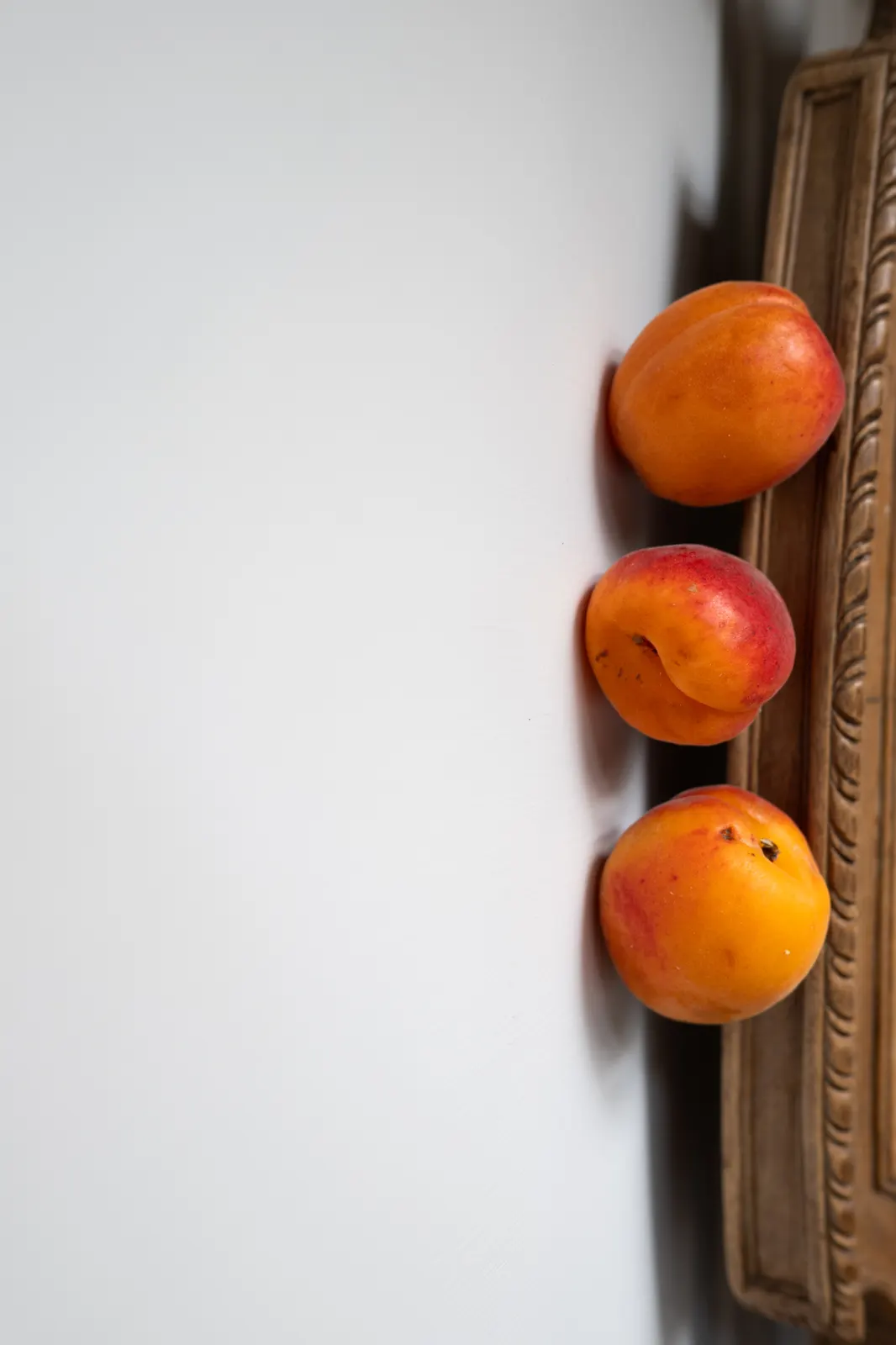
The best styling is the kind you do not notice. It is not about making up a dish, but about giving back to the image what the plate loses under the lights: freshness, relief, appetite. It is an invisible art, whose success is measured precisely by the fact that it is never seen.
In brief
Food styling prepares a dish for the image without ever betraying it: it guides the eye, cares for the composition and restores the appetite a dish loses under the light. In luxury, it stays honest, because the image has to be the faithful promise of the plate served. It is one building block of art direction.
What a stylist does
Placing a herb to guide the eye, wiping the rim of a plate, choosing a cloth that does not steal the show: every decision serves the reading of the image. The stylist thinks through the composition before the light comes into play. Their work begins where the cook's ends, not to correct the dish, but to prepare it to be photographed.
This craft calls for a double culture: that of cooking and that of the image. You have to know how a sauce sets, how a salad wilts, how ice cream melts, in order to anticipate these reactions and capture the dish at the right moment. The stylist is a conductor of timing as much as an eye.
Before the light, the composition
An image is built in order: first the subject, then the light. The stylist lays the foundations by deciding the plating, the angle of the elements, the balance of empty and full. A well-judged composition makes everything else easier; a shaky composition cannot be salvaged by the work of light.
This hierarchy avoids a common trap: believing that beautiful lighting saves a poorly conceived dish. Light reveals what exists, it invents nothing. That is why styling and shooting move forward together, in a constant back and forth between the plate and the frame.
The stylist and the chef, a dialogue
Styling is not imposed on the chef, it holds a dialogue with him. The cook knows his dish better than anyone: its logic, its story, what he wants to convey. The stylist translates that intention for the image, without distorting it. The best series are born from this conversation, where each respects the other's ground.
This respect for the chef's gesture is at the heart of professional food photography. The image must serve the cuisine, never force it into a decorative mould foreign to its spirit.
The line never to cross
In luxury, the image must stay honest. A photographed dish has to be the one the client will find on the plate. Fake tricks, glue, varnish, resin ice cubes, shaving foam standing in for cream, have no place when working for a house of gastronomy. Trust is worth more than a perfect reflection, and a deceitful image always turns against the brand that approved it.
This demand for honesty is not an abstract moral constraint, it is a strategic choice. A premium clientele detects artifice and punishes it. The consistency between the photograph and the real experience is precisely what builds a house's reputation over the long term.
The real dish, not a fake
Photographing a real dish demands more rigour than faking it, but it is the only credible path in gastronomy. You have to work fast, with doubles prepared by the kitchen, capturing the product at its peak before it falls. This race against freshness is part of the craft and echoes the idea, dear to Jordan Sapally, of following the transformation of the ingredient, from delivery to the plate.
This approach of the real fits a cuisine of the product and the terroir. Jordan Sapally, for instance, shot the photographs for a portrait of chef Jessica Préalpato for her restaurant Empreintes, published by Priscilla Lanzarotti. Photographing a sincere cuisine calls for equally sincere styling: enhancing without disguising.
Trust is worth more than a reflection
A perfect reflection obtained through trickery is worth nothing if it destroys trust. In a long-term relationship with a house, every image commits the studio's credibility as much as the client's. Giving up a spectacular but dishonest effect is often the right decision, the one that protects the brand and the relationship.
It is this ethic that sets luxury styling apart from mass-market advertising styling. The aim is not to sell an illusion, but to reveal the best of a real dish.
Styling and material
Styling is also a science of the perishable. A fresh herb, a glossy sauce, a just-seared piece of meat have a very short life under the light. The stylist anticipates the misting, the condensation, the melting, and organises the shoot to capture each element at its best. Nothing is left to chance, everything is a matter of sequence and rhythm.
This mastery of materials extends beyond the plate: tableware, textile, surface, background all take part in the reading of the image. Choosing a matt stoneware over glossy porcelain, a crumpled linen over a stiff cloth, entirely changes the register of a photograph. Styling is a work of taste as much as of technique, consistent with all our food projects.
The stylist's tools, and the false friends
Styling has its toolbox, and it is more modest than you might imagine. Fine tweezers to place a herb to the millimetre, brushes to lay down a sheen of oil, a mister to revive the freshness of a vegetable, cotton to wipe the rim of a plate, a syringe to measure out a sauce: these are gestures of precision, not fakes. They reveal the real dish, they do not replace it.
The line is clear between these honest tools and the false friends of mass-market advertising. Varnish to make a piece of meat shine, glue standing in for milk, chemical smoke, resin ice cubes: these tricks produce images impossible to serve. They may suit an anonymous catalogue, never a house of gastronomy that commits its signature. The right reflex is to seek the real before artifice: a misting obtained with a mister rather than with glycerine, real steam rather than a digital effect.
This demand has a corollary: speed. A real dish does not hold, so you have to prepare, anticipate and release the shutter at the right moment, often with doubles sent from the kitchen. The stylist works hand in hand with the photographer and the chef to capture each element at its peak, before the freshness fades.
Styling and art direction
Styling is one building block of art direction. It holds a dialogue with the light, the frame and the tableware to compose a coherent image, faithful to the signature of the house. On its own, it produces beautiful dishes; integrated into an overall vision, it builds an identity. It is this integration that makes the difference between a pretty series and a series that clearly belongs to a brand.
Thinking of styling as part of the whole avoids orphan images, beautiful but interchangeable. The colour of a cloth, the style of a plating, the choice of props all have to answer the territory of the house, defined upstream in the brief. Only on that condition does a single photograph stay recognisable and strengthen the brand with every appearance.
At heart, food styling sums up the philosophy of the creative studio: meticulous, invisible work, entirely in the service of the product and the house. It does not seek to be noticed, it seeks to make you feel. And it is precisely because it disappears that it works.
Frequently asked questions
- What is food styling?
- It is the work that prepares a dish for the image: placing a herb to guide the eye, wiping the rim of a plate, choosing the cloth and the tableware, thinking through the composition before the light comes into play. The best styling is the kind you do not notice: it gives back to the image the appetite and relief a dish loses under the lights.
- Does food styling betray the real dish?
- It must never do so. In luxury, the image has to remain the honest promise of what the client will find on the plate. Fake tricks such as glue, varnish or resin ice cubes have no place when working for a house of gastronomy. Trust is worth more than a perfect reflection.
- What is the difference between styling and art direction?
- Styling is one building block of art direction. It handles the dish itself and its plating, while art direction orchestrates the whole: light, frame, tableware, set, consistency of the series. The stylist composes the plate, the art director composes the image and the overall signature of the house.
- Do you need a stylist for a simple reportage?
- Not always. Reportage in the kitchen seeks the truth of the service and often does without styling. The stylist becomes essential as soon as it comes to worked images, a campaign or a product sheet, where every detail of the dish counts and has to hold across a whole series.
About the author
Jordan Sapally
Photographe culinaire et directeur artistique
Jordan Sapally dirige un studio créatif dédié à l'image culinaire et hôtelière de luxe. Formé par l'hospitalité et le voyage, il travaille pour des restaurants étoilés, des palaces et des marques food premium, en France et à l'international. Son parti pris : une image sensible, cohérente et durable, au service de la cuisine et du produit.