Calling on a professional food photographer is not about paying for photos. It is about entrusting the image of a table, a chef or a palace to an eye that knows how to translate material, light and gesture. In Paris, where every house fights for attention, that difference shows in three seconds.
In brief
A professional food photographer translates the exacting standards of a kitchen into a precise image: controlled light, respected material, coherent narrative. For a restaurant or a palace, what is at stake is the first impression, the positioning and the perceived value, long before the first bite.
Why a professional rather than an amateur
A professional food photographer masters three constraints an amateur discovers too late: the fleeting nature of the produce, the light and the styling. A dish lives for a few minutes. The steam of a hot plate fades, an ice cream melts, a herb wilts, a sauce sets. Photographing accurately means working fast without ever rushing anything.
Light is the second trap. Shiny surfaces, sauces, porcelain and glasses bounce back reflections that betray poorly considered lighting. A professional knows when a north-facing window is enough and when the light has to be built with flash or continuous lighting, as detailed in our article on light in food photography.
Styling, finally, shows without being noticed. A good plating photographed stays faithful to the one served. The professional's role is not to embellish a lie, but to reveal the real product at its best angle.
What a professional image changes for a table
A professional image shifts the perception of an establishment even before the visit. On a website, a booking page or a social network, a future guest forms an opinion in a few seconds. An approximate photo sows doubt about everything else. A precise photo immediately sets a standard.
This perception has a direct commercial value. It justifies a positioning, supports a price, attracts the clientele the house is genuinely aiming for. The image becomes an argument that works continuously, across every medium, long after the day of the shoot.
These orders of magnitude are not promises, they are benchmarks observed on assignment. They say one simple thing: a professional image is not measured by the price per photo, but by what it brings in over time.
The case of Michelin-starred restaurants and palaces
For a Michelin-starred restaurant or a palace, the image is not an extra, it is part of the story of excellence. A house at this level does not communicate with a single beautiful photo, it communicates with a coherent universe: the table, the dining room, the bedrooms, the events, everything has to belong to the same visual world.
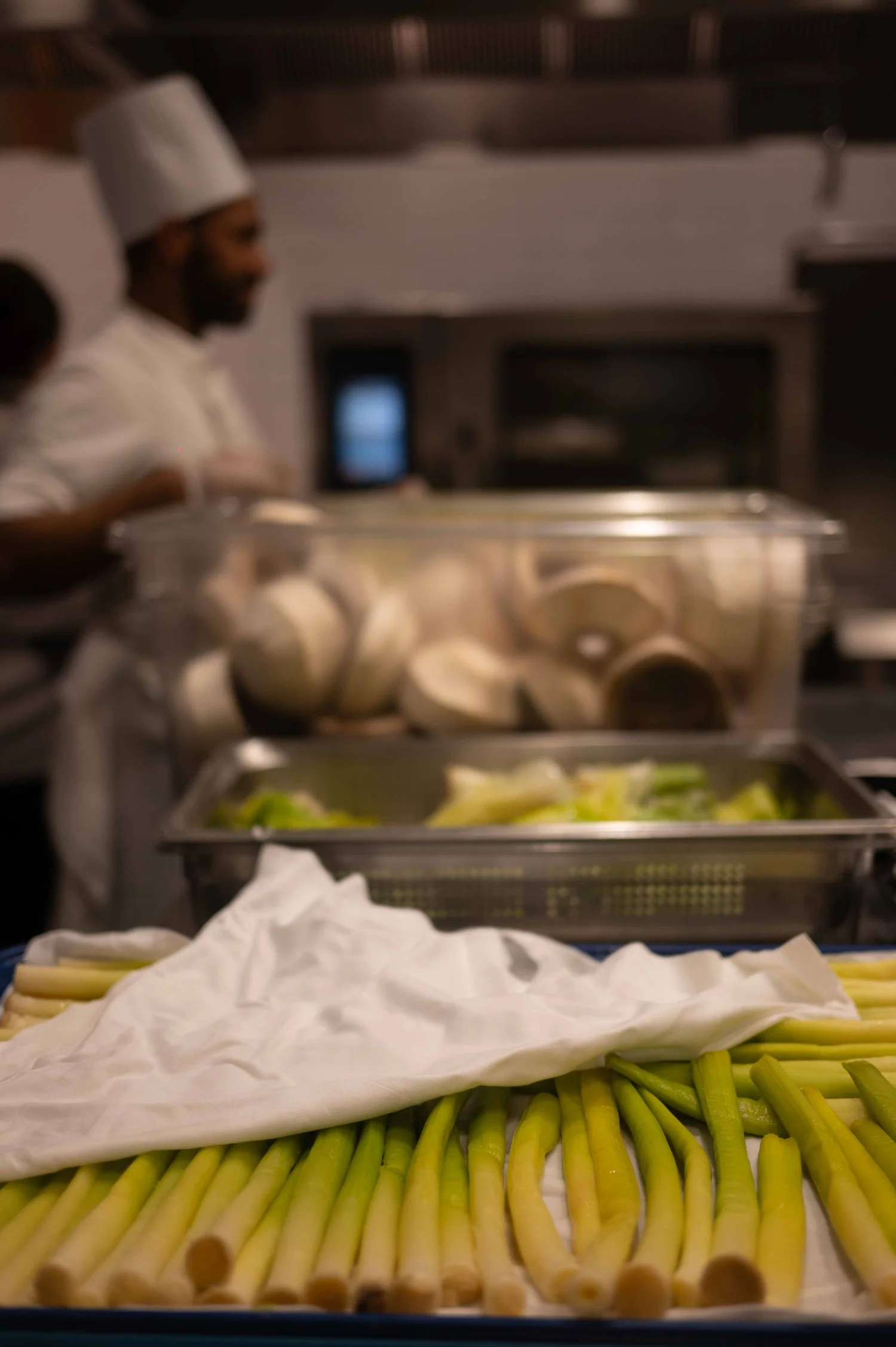
The first challenge is respect for the service. A reportage in a starred house takes place alongside the rush, never against it. The photographer makes themselves forgotten, captures the right gesture, and reveals the true soul of the place without ever freezing it.
The second challenge is the material of luxury. Coding the exceptional into an image demands a precise vocabulary, made of silence, textures and restraint. It is a craft in its own right, developed in our article on how to photograph a palace. The houses that have understood this entrust their image to a single eye, not to a succession of providers who never speak to one another.
What a professional brings that a phone will never replace
A smartphone photographs a dish. A professional tells the story of a house. The difference lies not in the device, but in the intention behind the image. A professional thinks about the narrative before the plating: what this dish says about a chef, a season, a signature.
This narrative comes as much from the whole as from the detail. A texture, a roughness, the mist on a glass sometimes say more than a dish seen from above. The professional knows how to frame these fragments that give depth to the story of a place.
When to call on a food photographer
Certain moments make the image indispensable, and anticipating them avoids shooting under pressure. The most frequent triggers always come back to the same points in the year:
- A new menu or a change of season: the dishes evolve, the images have to follow.
- A website or identity redesign: a new visual house calls for a fresh and coherent series.
- A press kit or a guide submission: the media and the juries judge on the image too.
- An opening or a repositioning: the first impression is prepared, it is not improvised.
- A campaign or a brand partnership: a commercial stake deserves dedicated art direction.
In each of these cases, a few weeks' notice is enough to prepare the produce, the venue and the intention. The detail of the services is presented on the studio's photography page. The studio also supports restaurants, bistros and brasseries throughout France.
How to choose your food photographer in Paris
Choosing a food photographer means checking three things: the consistency of their portfolio, their understanding of your world, and their ability to adapt the image across all your media. A single beautiful shot says nothing. A series that holds from the first visual to the last says everything.
Look at the depth of the references. An eye seasoned to the demands of gastronomic houses and palaces knows what the top tier requires in restraint and precision. Then check the way of working: a professional who frames the intention before the shoot saves you time and protects your image, a principle we detail in our briefing checklist for a food brand.
Finally, ask yourself whether you need a photographer alone or a complete setup. When the image has to live across several media and several seasons, a creative studio brings a consistency that a one-off service cannot guarantee.
Before choosing, ask to see a complete series produced for a single house, not just the three most beautiful images in a portfolio. The consistency of a series reveals a professional far better than one exceptional shot.
Frequently asked questions
- Why call on a professional food photographer?
- Because a dish is photographed in a short window, under difficult light, with materials that betray the slightest flaw. A professional masters light, food styling and narrative. They deliver an image faithful to the chef's work, usable on the menu, the website, the press and social media.
- How much does a food photographer cost in Paris?
- The budget depends on the number of dishes, the level of production and the usage rights. A half-day of reportage does not cost the same as a campaign with art direction and film. The right benchmark is not the price per photo, but the lifespan and consistency of the images produced.
- Is a food photographer useful for a Michelin-starred restaurant?
- Yes, and that is often where the stakes are highest. A starred table owes itself an image worthy of its cuisine, consistent across every medium. The reportage takes place without disrupting the service, and every visual has to reflect the exacting standards of the house.
- What is the difference between a food photographer and a generalist photographer?
- The food photographer knows the constraints of food: freshness, steam, reflections on sauces, the hold of a plating. They work with a stylist, anticipate melting and condensation, and know what an image has to say about a house. A generalist masters the technique, rarely these on-the-ground reflexes.
- When should you schedule a food shoot?
- At the moments when the image carries real stakes: a new menu, a change of season, a website redesign, a press kit, a guide submission, an opening or a campaign. Planning a few weeks ahead lets you prepare the produce, the venue and the art direction without rushing.
About the author
Jordan Sapally
Photographe culinaire et directeur artistique
Jordan Sapally dirige un studio créatif dédié à l'image culinaire et hôtelière de luxe. Formé par l'hospitalité et le voyage, il travaille pour des restaurants étoilés, des palaces et des marques food premium, en France et à l'international. Son parti pris : une image sensible, cohérente et durable, au service de la cuisine et du produit.