
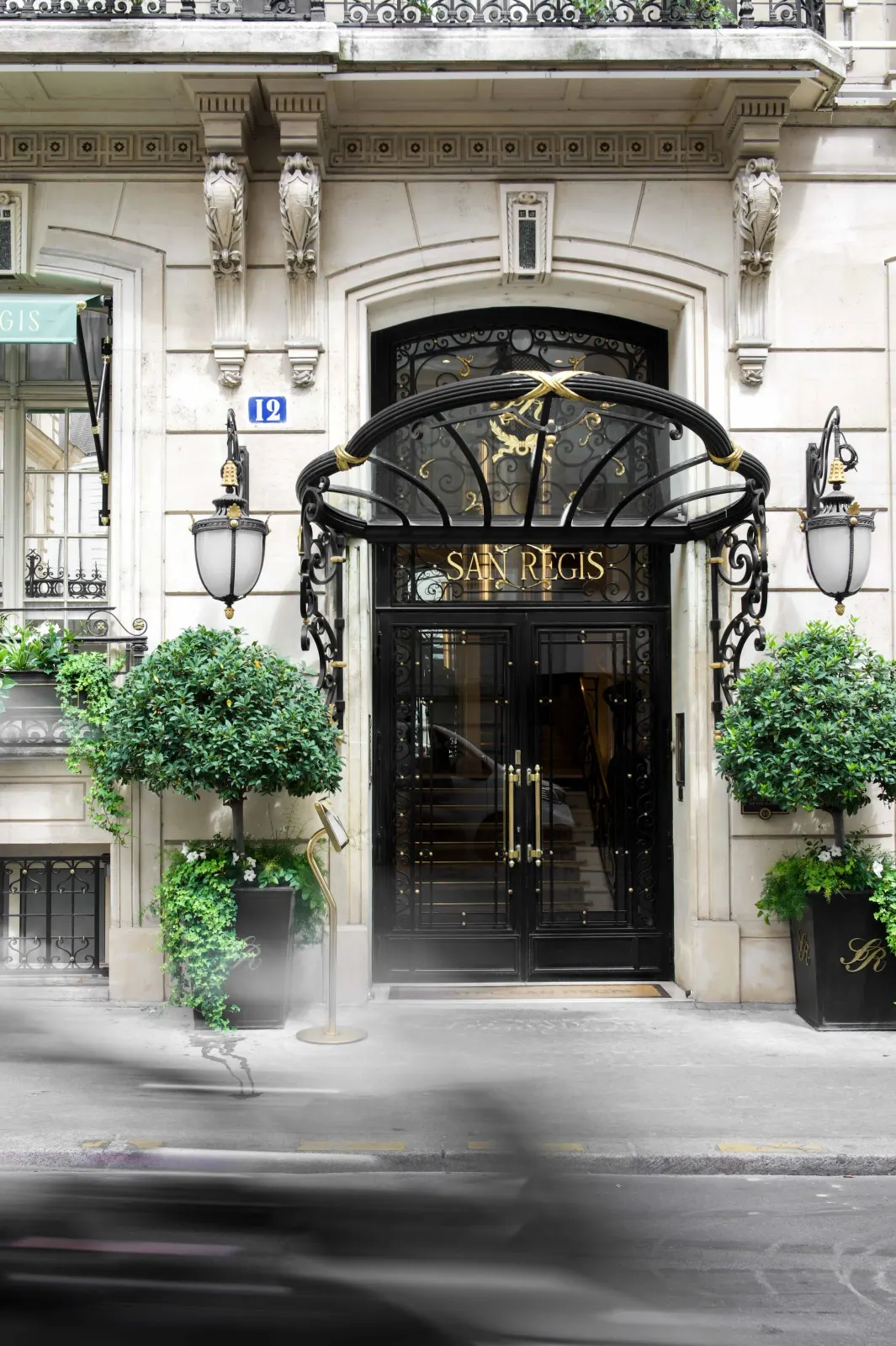
When photographing a hotel, the right question is not "photo or video" but "where does the booking happen". Your website, Booking.com, your Google listing: each imposes its own formats and minimums. A hotel photographer therefore starts there, before taking out a single camera. Video comes next, and it is often filmed on the same day.
In brief
Start with a photo base that meets booking platform requirements: Booking.com asks for at least 10 high-resolution photos, Google at least three photos of the rooms and the exterior. Rooms and bathrooms first, then shared spaces. Short vertical video follows, ideally filmed on the same day.
Where to start: the booking channel before the camera
The first step in a hotel photo and video project is to list the channels where your guests book, then what each one requires. A traveller almost always discovers a hotel through an image: a thumbnail on Booking.com, a Google listing, a gallery on your website. That is where the decision is made, not in a printed brochure.
This starting point shapes everything else. It sets the number of photos needed, their orientation, their resolution and the spaces to cover first. A shoot planned simply "to make beautiful images" without this framing almost always leaves gaps: a forgotten room category, no bathroom shot, a façade photographed against the light.
The stakes are broad. According to INSEE, France's national statistics office (2025 data, published July 2026), France has 14,886 hotels, with an average occupancy rate of 62.3%. Two, three and four-star hotels account for 10,903 of them, around 73% of the total (the studio's calculation from this data). In such a market, most properties look alike on paper. The image makes the difference at the moment of the click.
What Booking.com and Google actually require
Booking.com and Google publish precise photo requirements, and they act as the minimum specification for any hotel shoot. Knowing them before the shoot avoids having to recrop, or worse reshoot, part of the images.
On Booking.com, the Partner Hub photo requirements (updated August 2026) ask for at least 10 photos in high resolution, at least 2048 x 1080 pixels and ideally 4000 x 3000, in landscape format. The platform also recommends at least four photos of each room type and one of the bathroom.
On Google, the Google Business Profile help sets out what a hotel listing should show: at least three photos of the exterior, at least three photos of the rooms, at least one photo of each shared space (spa, gym, dining room) and at least three photos of the team.
| Platform | What it asks for | What it means on the shoot |
|---|---|---|
| Booking.com | 10 photos minimum, 2048 x 1080 px minimum, landscape, 4 photos per room type | Cover every room category, frame horizontally |
| Google Business Profile | 3 exterior, 3 rooms, 1 per shared space, 3 team photos | Plan the façade, each space and time with the team |
| Your website | No fixed rules, but must hold all the others together | A consistent series, adaptable to every format |
The hotel website is the only channel without imposed rules. That is precisely where the coherence of the series matters most, since guests compare it with what they have seen elsewhere.
Which spaces to photograph first
Rooms and bathrooms come first, because they are what the guest is buying. A room is photographed from several angles: the bed and the light, the desk or lounge corner, the view, a detail of material. Each category deserves its own series, even when two rooms look similar, because guests compare what they pay for.
Next come the spaces that make the experience: breakfast, the restaurant and bar, the spa or pool, the lobby and terraces. These are what set apart two hotels of the same category. A well-photographed breakfast reassures as much as it tempts. For the hotel's restaurant, the principles are those of a well-prepared restaurant shoot: a tight selection, a slot outside service, a chosen light.
The exterior and the team close the list. The façade locates the hotel and reassures on arrival; the team humanises the Google listing, which explicitly asks for it. Decorative details, finally, bind the wide shots together and give the series its identity. That attention to material and detail is at the heart of Jordan Sapally's photography.
Photo or video: what comes first?
Photography comes first, because it is what booking platforms require. Without a complete photo base, a Booking.com or Google listing remains incomplete, however good the videos alongside it. Video follows, as an accelerator of desire on social media and the Google listing.
The expected video formats are short. A Google listing accepts videos of up to 30 seconds, at 720p minimum, according to Google Business Profile's video guidelines. On YouTube, any vertical or square video of three minutes or less is now classified as a Short, according to YouTube Help. Short vertical video has therefore become the common ground of social media.
The most efficient approach is to shoot photo and video on the same day. The logistics (room access, light, set-up) are shared, and both media tell the story of the same place under the same direction. Jordan Sapally's films and video are built on this pairing. To go further on filmed storytelling, our article on culinary video as narrative explains how to build a sequence.
Shooting without disturbing guests
A hotel shoot is planned around occupancy and light, so as never to disturb guests on site. Shared spaces are photographed early in the morning, before or just after breakfast, while the lobby and terrace are still empty. Rooms are shot between two stays, once housekeeping is done.
The scouting visit sets the running order. It identifies the orientation of each space, the hours when natural light enters the rooms, and the areas that need extra lighting. Light in a hotel is worked like light on a plate, a subject we develop in our article on light in food photography.
On the hotel's side, three things make the day easier: block the rooms to be photographed, appoint a contact who knows the property and can approve images on the spot, and prepare each room like a set (immaculate linen, everyday objects put away, curtains adjusted). The rest is agreed with the photographer during the brief.
| Time | Spaces to photograph | Why |
|---|---|---|
| Early morning | Façade, lobby, terraces, pool | Empty spaces, soft light |
| Mid-morning | Breakfast, restaurant | Real service, fresh produce |
| Between stays | Rooms and bathrooms | Rooms free and ready |
| End of day | Bar, exteriors, evening mood | Warm light, the venue's own lighting |
Independent hotel or group: a shared visual charter
An independent hotel looks for a series that conveys its singularity; a group looks for a consistent image across several addresses. Both start from the same brief, but they do not lead to the same deliverable.
For an independent hotel, the aim is to capture what sets it apart: a neighbourhood, a decorative style, a table, a welcome. The brief relies on a few visual references and on what the hotel does not want to show, a method detailed in our photo brief checklist, which transposes easily to hospitality.
For a group, the aim is coherence. A shared visual charter (framing, light, colour rendering, order of series) lets a guest move from one property to another without changing worlds. It is art direction work, set once and then applied to each address. The same principles shape the image of the most demanding houses, as we explain in our article on how to photograph a palace.
One or several properties
Tell us about your hotel or group, and we will shape the approach together.
One shoot day, twelve months of content
A well-prepared shoot day feeds the website, the platforms, the Google listing and social media for an entire season. The condition: plan the deliverables in the brief, not after the shoot.
In practice, one series is adapted into high-definition files for the website and Booking.com, lighter formats for Google, vertical crops for social media, and short videos for stories and the Google listing. Retouched files are generally delivered one to two weeks after the shoot, depending on the number of spaces covered.
To keep a steady presence without reshooting every month, a few additional sessions through the seasons take over: a new menu, a terrace that opens. Jordan Sapally's production work organises these follow-ups, and the hotel's restaurant can also have a dedicated series, in the spirit of our food photography reportage in starred restaurants.
Jordan Sapally's hospitality work can be seen in our hospitality projects.
Frequently asked questions
- Where should a hotel start with photo and video?
- Start with the channels where bookings happen: your website, Booking.com and your Google listing. List what each one requires, then build a complete photo base (rooms, bathrooms, shared spaces, exterior, breakfast). Short vertical video comes next and can be filmed during the same shoot day.
- How many photos does a hotel need on Booking.com?
- Booking.com asks for at least 10 photos per property, in high resolution (at least 2048 x 1080 pixels, ideally 4000 x 3000) and in landscape format. The platform also recommends at least four photos of each room type and one of the bathroom. A hotel with several room categories therefore needs far more than 10 images.
- Which photos should go on a hotel's Google listing?
- Google recommends at least three photos of the exterior, at least three photos of the rooms, at least one photo of each shared space (spa, gym, dining room) and at least three photos of the team. These guidelines appear in Google Business Profile's official help and set the minimum for any hotel listing.
- Should a hotel invest in photo or video?
- Both, but in that order. Photography remains the foundation required by booking platforms and Google. Short vertical video then feeds social media and the Google listing, which accepts videos of up to 30 seconds. Filming both on the same day avoids paying for the logistics twice.
- How do you photograph a hotel without disturbing guests?
- By planning the day around occupancy and light. Shared spaces are photographed early in the morning, before guests are up, and rooms between two stays. A scouting visit beforehand sets the running order, so the shoot stays discreet and never disrupts the experience of guests on site.
- How long does it take to photograph a hotel?
- It depends on the number of spaces and room categories. A small independent hotel is often covered in one day; a property with a spa, a restaurant and several room types takes one to several days. Allow one to two weeks afterwards for selection and retouching of the delivered files.
About the author
Jordan Sapally
Photographe culinaire et directeur artistique
Jordan Sapally dirige un studio créatif dédié à l'image culinaire et hôtelière de luxe. Formé par l'hospitalité et le voyage, il travaille pour des restaurants étoilés, des palaces et des marques food premium, en France et à l'international. Son parti pris : une image sensible, cohérente et durable, au service de la cuisine et du produit.