
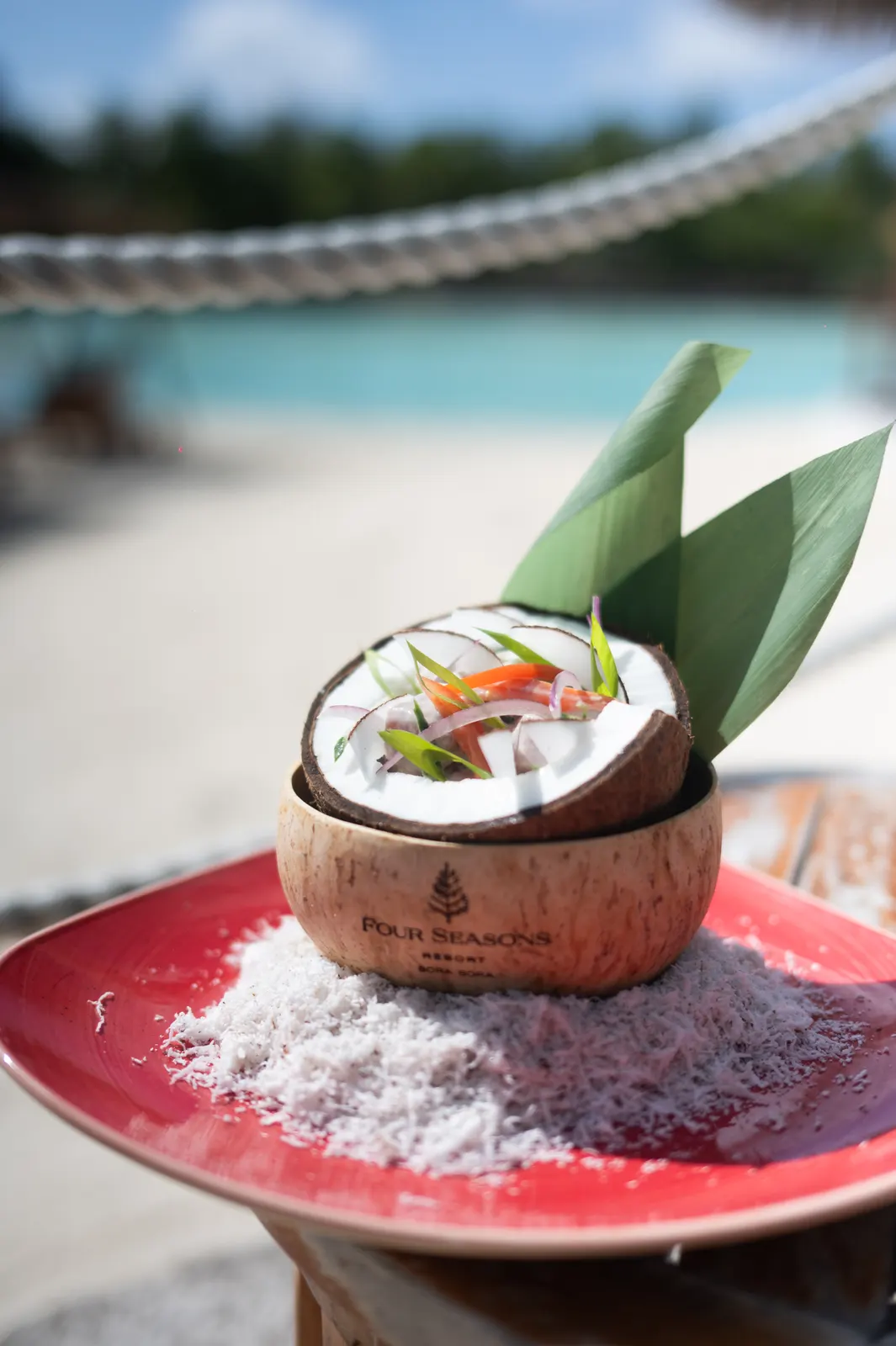
A destination is chosen from images long before it is booked. Among them, the table holds a place of its own: it is the moment of the journey that engages every sense, and the one no other place can copy. A successful destination photo story starts there. It tells the story of a place through its landscapes, its people and its cuisine, and builds an image library that serves the website, the press and social media, provided the narrative, the season and the rights have been agreed before departure. This guide is written for tourism boards, travel agencies, magazines and hotels looking for a photographer to tell the story of their destination.
In brief
A destination photo story tells the story of a place through its landscapes, venues, faces and above all its table, the moment of the journey that engages every sense. Well prepared (narrative, season, light, usage rights), a single trip feeds the website, brochures, press and social media.
Why does the table tell a destination's story best?
The table is the hardest image of a destination to copy: two lagoons can look alike, two cuisines never do. It is at the table that travellers see a place, taste it and meet the people who make it. No other image carries as much identity in a single frame.
The challenge is to be chosen among many others. According to UN Tourism's barometer published in January 2026, an estimated 1.52 billion international tourist arrivals were recorded worldwide in 2025, up 4%, including 793 million in Europe. France remains the world's leading destination, with 102 million international visitors and €77.5 billion in receipts in 2025, according to the 2025 tourism report from France's Directorate General for Enterprise (February 2026). In this competition, a postcard landscape is no longer enough to set one destination apart from another.
Wine gives a measure of how much the table weighs in the choice of a trip. Atout France, the French tourism development agency, counted (February 2025) 12 million wine tourists in France in 2023, including 5.4 million foreign visitors, and the number of international visitors has grown by 29% since 2016. These travellers do not come only for a landscape: they come to taste a region, meet the people who grow it and sit at their table.
For a tourism board or an agency, food and hospitality photography then becomes a destination tool. A dish, a market, a producer's gesture express the identity of a place faster than any text.
The six perspectives of a destination photo story
A complete destination photo story combines six perspectives: the wide landscape, the venues, details and textures, faces, the table and the experience. Each one answers a different question from the future traveller, and an image library that leaves one out leaves a gap in the story. These perspectives shape the studio's travel series.
Landscape and venues: setting the scene
The wide landscape places the destination in a single image: the line of a lagoon, a mountain in the mist, a city seen from above. Venues (a market, a street, a hotel, an estate) then bring the human scale. These two perspectives open brochures and home pages. On their own, they remain interchangeable from one destination to the next.
The table and the people behind it: making people taste
The table is the perspective that sets a place apart. A dish served facing the sea, a market stall at dawn, the hand of a cook or a producer at work: these images carry the flavour of a region. They require the same care as in a studio, with the setting of the destination added to the frame. Plating and food styling matter as much as light: a local dish poorly presented undermines the very destination it was meant to serve.
Faces and experience: bringing it to life
Faces give the story its soul: a fisherman, a waitress, a craftsman, a traveller. The experience shows what people live on site: a boat crossing, a cocktail at sunset, a bike ride along a pontoon. These are the images that turn "how beautiful" into "I'm going", and the ones that require the most tact, particularly regarding image rights.
| Perspective | What it shows | Where it is used |
|---|---|---|
| The wide landscape | The geography and light of the place | Home pages, brochure covers, billboards |
| Venues | Markets, streets, hotels, estates | Guides, itineraries, trip pages |
| Details and textures | Textures, craftsmanship, plants | Social media, layouts, video transitions |
| Faces | Residents, producers, teams | Press, portraits, destination stories |
| The table | Dishes, produce, kitchen gestures | Food press, social media, gastronomy campaigns |
| The experience | What the traveller lives | Agencies, social media, advertising |
Telling your destination's story
Let's talk about your destination and the images it deserves.
Tourism board, agency, magazine, hotel: who commissions what?
The same destination is not photographed in the same way for a tourism board, a travel agency, a magazine or a hotel. Each one buys a different image, and the brief should say so from the outset.
| Client | What they are looking for | What the photo story delivers |
|---|---|---|
| Tourism board, regional tourism committee | A broad image library, shared with the press and partners | Series by theme (landscapes, table, producers, faces) and rights extended to partners |
| High-end travel agency | The experience it sells | Accommodation, restaurants, activities, in website and brochure formats |
| Magazine, travel guide | A narrative and a signature | An editorial sequence, portraits, a strong opening image |
| Destination hotel or resort | The property within its surroundings | The venue, its table and its surroundings, for the website and social media |
The tourism board is the most demanding case: its images travel to third parties (journalists, tour operators, local partners), which directly affects the rights to negotiate. For a hotel, the approach is closer to a property shoot, covered in our article on photo and video for a hotel. In a palace hotel, by the sea or in the city, the principles for coding luxury into an image remain the same. The choice of framing, palette and tone falls under art direction, which keeps the series consistent from one venue to the next.
How do you prepare a destination photo story?
A destination photo story is prepared on three calendars at once: the produce, the light and the venues. Once on site, time always runs short, and what was not planned is rarely recovered.
Aligning the season with the table
The season decides what will be on the plate and on the market stalls. A food destination is photographed when its signature produce is there: the harvest, the catch, the market, the local festival. The tourism board and the producers know this calendar better than anyone. It sets the date of the trip, before any other constraint.
Following the light rather than the clock
The light of a destination changes everything. In the tropics, the midday sun flattens relief and burns out whites; the hours after sunrise and before sunset bring back texture and colour. In cities, the night and the neon signs tell a different story from the day. The schedule is built around these windows, following the principles set out in our article on natural and artificial light.
Scouting and informing venues
Every venue photographed is scouted and informed in advance: a restaurant in full service, a covered market, an estate, a heritage site. Scouting sets the angle and the time; getting in touch avoids arriving at the wrong moment. In the kitchen and the dining room, the rules are those of any food photo story: scout before shooting and respect the service. The overall logistics (team, transport, permissions, schedule) fall under production.
Which rights should be agreed before departure?
Usage rights are negotiated before the shoot, not after. In France, the Intellectual Property Code (Article L131-3) requires it: each right granted must be mentioned separately, and its field of use must be limited in scope and purpose, place and duration.
Media, territory, duration, partners
Four questions define the licence. On which media will the images appear (website, brochures, press, social media, billboards)? In which territory (France, Europe, worldwide)? For how long? And who else will be able to use them? A tourism board may share its image library with journalists, agencies or local partners, and this sharing must be set down in writing. These points are settled in the brief, alongside the other questions detailed in our photo brief checklist. The same four questions apply wherever the shoot takes place.
Image rights of the people photographed
In France, image rights stem from the right to privacy set out in Article 9 of the Civil Code, which states that everyone has the right to respect for their private life. A recognisable person (a producer, a cook, a resident met at the market) should in principle give their consent before their image is published. Rules vary from one country to another; for promotional use, written consent collected on site at the time of the shoot is the safest option. Private venues (restaurant, estate, hotel) also give their approval beforehand.
Preparing your photo story
Let's plan the narrative, the season and the uses of the images together.
One trip, several deliverables
For a distant destination, travel weighs heavily on the budget: it might as well serve every channel at once. Photography, short films and social media content are produced during the same trip, on the same scouting and under the same art direction.
Photography feeds the website, brochures and press kits. Film, from the short vertical format to the destination film, carries what a still image cannot say: the sound of a market, a cook's gesture, the light as it turns. Our article on food video that turns a dish into a story details this approach, offered by the studio as films and video.
Depending on the scale of the project, the studio brings together photographers, videographers and assistants around a single vision, an approach explained in our article from photographer to studio. Visual references are built before departure, without reproducing those of another destination: the method is in our article on how to draw inspiration without copying.
What our series in Japan, Hong Kong and French Polynesia show
The studio's travel series apply this method: each destination is told through its streets, its venues and its table, rarely through landscape alone.
In Japan, the series moves from a crowd under umbrellas to the red gateways of a shrine, from a fishmonger cutting a tuna at the market to a cook's hand in a sieve of soba. In Kyoto and Tokyo, restaurant photo stories (Moko, Muni, Esterre, Beige) extend this narrative to the table. In Hong Kong and Macau, a street series (skyscrapers, markets, neon) sits alongside the photo stories produced at Caprice, Lung King Heen and Alain Ducasse at Morpheus, which can be seen in the culinary projects.
In French Polynesia, the travel series shows everyday island life: a boat crossing, shell necklaces, a frangipani flower, the sign of a roulotte food truck. The series at the Four Seasons and the St Regis in Bora Bora, for their part, set the table facing the lagoon: a dish served in a coconut, a chef plating, a cocktail held among the leaves. These properties feature in the hospitality projects, and each destination has its own series on the Travel page.
This perspective comes from far away. Before photography, Jordan Sapally studied tourism and communication, worked in hospitality and travelled through more than 35 countries, from Asia to South America, as told on his About page. He photographs a destination the way a traveller discovers it: through the streets, through the people, through the table.
Frequently asked questions
- What is a destination photo story?
- A destination photo story is a series of images that tells the story of a place through its landscapes, venues, people, food and the experience it offers. It is commissioned by a tourism board, a travel agency, a magazine or a hotel. The same series then serves the website, brochures, press kits and social media, provided its uses were agreed before the shoot.
- Why photograph gastronomy to promote a destination?
- Because the table engages every sense and belongs to one place only: two lagoons can look alike, two cuisines never do. Wine gives a measure of this in France: Atout France counted 12 million wine tourists in 2023, including 5.4 million foreign visitors. An image of the table makes people want to come and taste, where a landscape alone remains interchangeable.
- What rights should a tourism board secure for its photos?
- In France, Article L131-3 of the Intellectual Property Code requires each right granted to be stated and limited in scope, purpose, place and duration. Wherever the shoot takes place, this means listing before departure the media (website, brochures, press, social media, billboards), the territory, the duration and any sharing with partners such as journalists or tour operators.
- Do the people photographed need to give their consent?
- For anyone recognisable, in principle yes. In France, image rights stem from the right to privacy set out in Article 9 of the Civil Code, and rules vary from one country to another. For promotional use, written consent is the safest option, collected on site from the producers, cooks or residents who appear clearly in the frame. Private venues also give their approval beforehand.
- Can photo and video be produced during the same trip?
- Yes, and it is often the most efficient option for a distant destination: the travel, location scouting and permissions are shared. The studio brings together photographers and videographers according to the project, under a single art direction. Short video clips feed social media, while the photographs serve the website, brochures and press kits.
- Does the studio work abroad?
- Yes. Jordan Sapally has produced travel series in Japan, Hong Kong, Singapore, India, Mexico, Colombia, New York, Italy and French Polynesia. They can be seen on the Travel page of the website. The studio works in France and internationally, on a single shoot as well as on long-term projects for destinations, hotels and brands.
About the author
Jordan Sapally
Photographe culinaire et directeur artistique
Jordan Sapally dirige un studio créatif dédié à l'image culinaire et hôtelière de luxe. Formé par l'hospitalité et le voyage, il travaille pour des restaurants étoilés, des palaces et des marques food premium, en France et à l'international. Son parti pris : une image sensible, cohérente et durable, au service de la cuisine et du produit.